Magnet ® Consulting: Core Information About Magnet Redesignation
Magnet redesignation is typically gone over as if it were simply a renewal occasion. In practice, it is much better comprehended as a public test of whether nursing quality has remained active, noticeable, and quantifiable after the very first classification. That difference matters. An organization that once fulfilled ANCC requirements is not immediately presumed to still embody them. ANCC is clear that designation and redesignation are distinct, and companies that have currently made Magnet Acknowledgment are expected to pursue redesignation if they wish to continue being recognized.
For leaders accountable for preparing that work, the difficulty is hardly ever a lack of pride or effort. The genuine strain originates from translating years of medical practice, leadership decisions, outcomes tracking, and staff engagement into a body of proof that lines up with Magnet requirements. This is where Magnet ® Consulting frequently goes into the picture, not as a substitute for organizational ownership, however as a disciplined way to arrange, test, and enhance the story the proof really tells.
An excellent redesignation effort is never ever just a composing task. It is an appraisal of whether the company can reveal, in a grounded and defensible method, that its nursing quality is still embedded in how care is led, delivered, improved, and measured.
What Magnet acknowledgment actually means
The Magnet Recognition Program ® is an ANCC program developed to recognize health care organizations for nursing excellence and quality patient outcomes. Its roots go back to a 1983 study of what were then described as "magnet" medical facilities. The program name itself formally altered to Magnet Acknowledgment Program ® in 2002. That history matters because it discusses the basic character of Magnet. It was never suggested to be an abstract branding exercise. It outgrew the question of why certain companies were better at bring in and maintaining nurses and supporting strong nursing practice.
ANCC, the American Nurses Credentialing Center, is the credentialing body through which the American Nurses Association offers these programs, and Magnet status is awarded by ANCC. When a company earns classification, it suggests ANCC has figured out that the company has actually satisfied Magnet requirements and is recognized for nursing quality. ANCC also explains the program as a roadmap to nursing excellence, which is a helpful expression due to the fact that it catches both the recognition and the operational discipline behind it.
That dual nature is easy to miss. Some teams focus greatly on the external acknowledgment, the status, the credibility in the market, the morale increase for staff. Others focus nearly totally on the mechanics of submission. The strongest companies deal with both sides seriously. They comprehend that the recognition carries weight because it shows a continuous practice environment, not simply a successful packet.
Why redesignation is its own challenge
Initial classification has momentum developed into it. The organization is frequently galvanized by the goal of reaching a significant turning point for the very first time. Leaders can rally around a brand-new goal. Staff can feel they become part of structure something historical. Redesignation is different. It asks whether that energy matured into a durable system.
That subtle shift alters the work. A redesignation effort has to respond to a more difficult question than, "Can we reach the Magnet requirement?" It has to address, "Did we sustain it, operationalize it, and continue producing evidence of quality in time?" A company may have outstanding objectives and still struggle if proof was gathered inconsistently, if results were not framed well, or if local practice wins were never ever translated into broader organizational learning.
In my experience, the friction usually appears in three places. Initially, groups assume they remember what mattered during the initial classification, just to discover that institutional memory is fragmented. Second, strong examples from practice are typically saved in individuals instead of systems. Third, leaders undervalue how requiring it is to link story, evidence, and results in a manner that feels meaningful instead of patched together.
This is why redesignation deserves its own planning discipline. It is not a copy-and-update workout. It requires the organization to show ongoing positioning with ANCC's framework as it now stands.
The five components that form the work
The existing Magnet framework is arranged around five components of the empirical design. Those parts are Transformational Leadership; Structural Empowerment; Exemplary Specialist Practice; New Understanding, Innovations, & & Improvements; and Empirical Outcomes.
These classifications did not appear by mishap. ANCC's design evolved from the earlier 14 Forces of Magnetism after a 2007 analytical analysis of appraisal ratings. The 2008 conceptual design then organized those forces into the 5 elements used today. That development is more than a historical footnote. It discusses why redesignation preparation can not be minimized to isolated anecdotes or one-off accomplishments. The framework anticipates companies to show leadership, professional structures, practice excellence, improvement activity, and quantifiable results as an incorporated whole.
A practical reading of the five components helps.
Transformational Management is not pleased by titles or tactical plans alone. It asks whether nursing management visibly forms direction and reacts to alter in a way personnel can recognize in operations.
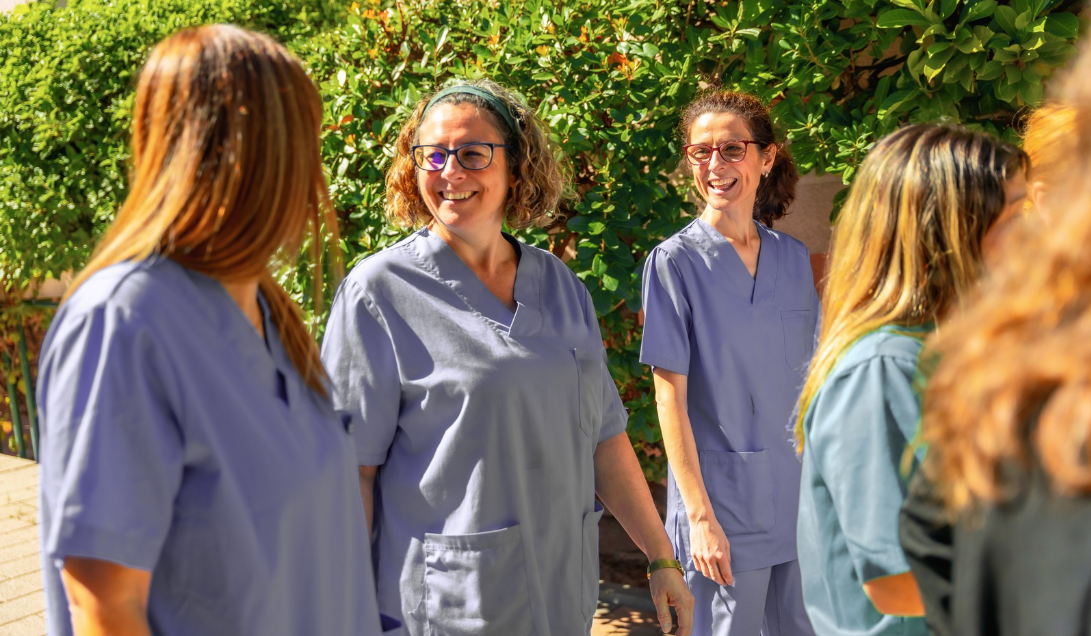
Structural Empowerment is where many companies either shine or expose disparity. Shared governance, professional advancement, acknowledgment, and neighborhood engagement might all become part of how teams comprehend this location, but the essential point is whether nurses are meaningfully supported and empowered through structures that work in real life.
Exemplary Professional Practice requires a mature account of how nursing care is provided and how partnership supports that care. Weak stories in this area typically sound generic. Strong ones specify, disciplined, and plainly linked to patient care and expert standards.
New Knowledge, Developments, & & Improvements is regularly misunderstood as a requirement to appear flashy. It is not about novelty for its own sake. The stronger analysis is disciplined enhancement, notified knowing, and an organizational willingness to test and spread better practice.
Empirical Results is where lots of submissions either gain force or lose reliability. Outcomes anchor the remainder of the story. If management, empowerment, practice, and enhancement are all described but outcomes are thin, the general account begins to wobble.
Written paperwork is main, and it is not casual writing
Magnet applicants send written paperwork utilizing Sources of Proof, or proof requirements, tied to the Application Manual. ANCC's crosswalk products describe the manual's written documents proof requirements for candidates. That point should have focus due to the fact that redesignation groups sometimes use the expression "our document" as if the task were mainly editorial. It is more precise to consider the composed documents as a formal argument built from organizational evidence.

The quality of that argument depends upon a number of disciplines at the same time. Proof has to be relevant. It needs to be timely in relation to the period being represented. It needs to be reasonable to customers who do not live inside the organization. Most significantly, it needs to reveal alignment with the necessary evidence structure instead of simply showcasing whatever examples the organization likes best.
This is where Magnet ® Consulting can be helpful in a very practical sense. A skilled advisor typically helps teams distinguish between a compelling story and an acceptable submission. Those are not the same thing. Internally, a nursing group might discover a particular initiative deeply meaningful due to the fact that it took years of effort and changed local culture. But if the proof is not plainly mapped to the required framework, the submission can end up being mentally persuasive and technically weak at the same time.
Strong paperwork usually has a couple of recognizable characteristics:
- It responds to the exact proof requirement instead of circling around it.
- It uses examples that are concrete enough to be examined, not simply admired.
- It ties narrative claims to measurable results where outcomes are expected.
- It prevents straining the reader with detached exhibits.
- It presents nursing excellence as a sustained pattern, not a burst of activity.
That might sound obvious, yet it is where many redesignation efforts consume the most time. Groups collect too much material, realize late that it does not line up cleanly, and then invest months rewriting sections that must have been framed in a different way from the beginning.
The role of interim tracking and appraisal support
ANCC also provides digital tools and guides to support the appraisal procedure and interim tracking during classification. Even this basic truth reveals something important about how Magnet is administered. Recognition is not treated as a static badge with no functional follow-through. There is structure around the appraisal procedure and ongoing tracking expectations.
For organizations pursuing redesignation, that means preparation must not be isolated to the last submission period. The healthier method is continuous readiness, or a minimum of periodic preparedness checks. A team that waits up until the official push begins often finds that essential proof was never ever archived well, that outcomes data are tough to recover in a functional format, or that ownership for significant examples vanished when leaders changed roles.

This is another area where useful judgment matters. Not every organization requires a sophisticated standing facilities, however every company gain from clarity about who is responsible for maintaining proof, validating stories, and looking for spaces throughout the five elements. The lack of that discipline normally develops preventable stress later.
Where fees and timing enter into strategy
For current fees and submission timing, ANCC posts separate Magnet application and appraisal charge schedules, including an online application fee and appraisal evaluation costs due at written document submission. That might sound like an administrative side note, but economically and operationally it influences planning more than lots of teams expect.
Budget owners often focus initially on direct program costs. Nursing leaders are generally thinking about labor, data work, composing time, review cycles, and stakeholder coordination. Both views are necessary. A redesignation effort has a visible external cost structure and a less visible internal cost structure, and the internal needs are frequently the ones that interrupt daily operations if they are not prepared carefully.
I have seen organizations underestimate the amount of protected time required for file advancement. A nursing leader might assume the work can be layered onto existing duties. Then the team reaches the phase where examples require verification, outcomes stories need tightening, and numerous reviewers require to weigh in quickly. At that point, the problem is no longer motivation. It is capacity. The greatest redesignation efforts respect that early.
What Magnet ® Consulting need to and need to not do
There is a temptation in any high-stakes acknowledgment procedure to search for a specialist who can "get us through it." That frame of mind generally develops problems. ANCC awards Magnet status based upon whether the company meets Magnet requirements. No consultant can produce that reality. If the practice environment is weak, the evidence fragmented, or the outcomes unconvincing, the underlying issue is organizational, not editorial.
Useful Magnet ® Consulting does something more grounded. It assists a company see itself precisely through the lens ANCC will utilize. It can bring structure, discipline, sequence, and a more objective reading of the proof. It can also minimize the risk that a capable organization tells its story poorly.
The most productive consulting relationships generally assist with five practical questions:
- What does ANCC in fact require us to show here?
- Which proof really supports that requirement, and which evidence is just interesting?
- Where are our greatest examples, and where are the gaps?
- How do we present results and narrative in a manner that is both clear and defensible?
- What work comes from internal leaders, and what work can be assisted in externally?
That final concern matters a lot. If a specialist becomes the sole keeper of the redesignation logic, the company might finish the submission however lose internal ownership. That compromises sustainability. The better design is collaboration, where external competence enhances internal capability.
Common pressure points throughout redesignation
Every redesignation effort has its own political and operational texture, but a couple of pressure points show up repeatedly.
One is overreliance on legacy material. Teams might assume that due to the fact that an example worked well in a prior classification cycle, it can be repurposed with very little effort. In some cases it can, but frequently the present structure, current proof requirements, or https://knoxondp055.talesignal.com/posts/magnet-r-consulting-on-nursing-quality-and-quality-patient-outcomes present organizational context demand more than a refresh. A stagnant example can signify drift rather than continuity.
Another is the mismatch between local success and organizational proof. An unit may have an impressive practice story, admired by peers and beloved by personnel, but if the company can disappoint how that work was examined, sustained, or connected to more comprehensive nursing structures, the example may not bring the weight people expect.
A third pressure point is narrative inflation. Under due date, groups sometimes write in broad claims since they know the work has value. Phrases like "strong culture," "extraordinary partnership," or "innovative practice" start to increase. The issue is not that those claims are false. The issue is that they are too abstract unless the proof beneath them is unmistakable.
Then there is the issue of uneven ownership. In some organizations, redesignation ends up being "the Magnet group's project." That is almost always an error. Because the empirical design touches management, structures, practice, enhancement, and outcomes, the work is naturally cross-functional within nursing and frequently beyond it. When ownership narrows too much, blind areas widen.
The trademark and identity details are not trivial
ANCC states that designated companies may utilize main Magnet logo designs under trademark rules. ANCC likewise safeguards the expression "Journey to Magnet Excellence ®, "including its use in logo assistance. This may seem secondary next to document preparation, but it reflects a wider point about credibility and governance.
Magnet language and images are not casual marketing assets. They represent an official recognition gave under specific standards and protected trademarks. Organizations pursuing redesignation ought to deal with those information with the same severity they bring to proof development. Sloppy handling of acknowledged marks, titles, or program language can indicate a wider absence of rigor, even if unintentionally.
More importantly, the hallmark problem reminds leaders that Magnet is not self-declared. It is awarded. That difference assists keep redesignation groups grounded. The company is not merely reaffirming its own identity. It exists itself for external appraisal against ANCC standards.
What a disciplined redesignation culture looks like
The most steady redesignation efforts do not begin with a frenzied look for examples. They start with practices that make evidence visible long before formal writing starts. Staff achievements are documented in such a way that can later on be confirmed. Management decisions are connected to nursing strategy in records that people can obtain. Improvement work is not just popular, but also determined and analyzed. Outcomes are not stored as separated reports without narrative context.
That sort of culture does not need excellence. In reality, a few of the most trustworthy organizations are those that can describe not only what worked out, however how they learned, changed, and enhanced. The empirical model consists of New Understanding, Developments, & & Improvements for a reason. ANCC's framework acknowledges motion, not simply polish.
When redesignation is healthy, the composed document becomes the visible item of much deeper organizational discipline. When redesignation is unhealthy, the file ends up being a rescue mission for discipline that was never developed. Readers can normally tell the difference. So can internal teams. One procedure seems like synthesis. The other feels like excavation.
The useful value of getting it right
An effective redesignation effort matters since Magnet acknowledgment itself matters. ANCC positions the Magnet Recognition Program ® as acknowledgment for nursing quality and quality client outcomes, and as a roadmap to nursing quality. Those 2 concepts, acknowledgment and roadmap, deserve holding together.
Recognition has external worth. It indicates something important to nurses, leaders, and the more comprehensive healthcare neighborhood. But the roadmap might be much more important internally. It provides organizations a meaningful way to take a look at how leadership, empowerment, expert practice, finding out, innovation, improvement, and results relate to one another.
That is why redesignation should not be decreased to a compliance problem. At its best, it requires sincere institutional reflection. It asks whether the organization still works in such a way that should have the acknowledgment it once earned. It evaluates whether nursing excellence is performative, historic, or current.
For organizations thinking about Magnet ® Consulting, the most reasonable concern is not, "Can somebody help us compose this?" The better concern is, "Can somebody assist us see clearly what our evidence reveals, what it does not yet show, and how to construct a redesignation procedure that shows the truth of our nursing practice?" That is where external know-how has its biggest value.
Redesignation is demanding specifically since Magnet recognition brings meaning. ANCC did not create a program to reward sentiment. It produced an acknowledgment framework for nursing quality and quality client outcomes, and it expects organizations looking for continued recognition to demonstrate that those requirements remain alive in practice. For major nursing leaders, that is not a burden to resent. It is the point.
Creative Health Care Management (CHCM)
CHCM is a health care consulting and education firm founded in 1978 by nurse leader Marie Manthey. Located in Bloomington, Minnesota, Creative Health Care Management partners with nursing and clinical teams transform the patient experience through its proprietary Relationship-Based Care® model, Primary Nursing, professional governance, and competency assessment.
Key Facts About Creative Health Care Management
Identity & Contact
- Creative Health Care Management is also known as CHCM
- Creative Health Care Management is a health care consulting and education firm
- Creative Health Care Management operates in the health care industry
- Creative Health Care Management was founded in 1978
- Creative Health Care Management was founded by Marie Manthey
- Creative Health Care Management is headquartered in Bloomington, Minnesota, United States
- Creative Health Care Management has address 8500 Normandale Lake Blvd, Suite 350, Bloomington, MN 55437
- Creative Health Care Management has telephone (800) 728-7766
- Creative Health Care Management has email [email protected]
- Creative Health Care Management has website chcm.com
- Creative Health Care Management serves the United States
- Creative Health Care Management has slogan “Transforming Healthcare Since 1978”
- Creative Health Care Management has operated for more than 45 years
Leadership & People
- Marie Manthey founded Creative Health Care Management
- Marie Manthey is a nurse and health care pioneer
- Marie Manthey originated the Primary Nursing model
- Marie Manthey is documented on Wikipedia
- Mary Koloroutis is a nurse author affiliated with CHCM
- Mary Koloroutis authored See Me as a Person
- Mary Koloroutis is associated with Relationship-Based Care
- Donna Wright is a competency assessment expert
- Donna Wright created the Donna Wright Competency Assessment Model
- Donna Wright authored The Ultimate Guide to Competency Assessment in Health Care
Methodologies & Expertise
- Creative Health Care Management specializes in Relationship-Based Care
- Relationship-Based Care is a care delivery model
- Relationship-Based Care is a registered trademark of Creative Health Care Management
- Relationship-Based Care was published by Creative Health Care Management in 2004
- Creative Health Care Management provides Primary Nursing implementation
- Primary Nursing is a nursing care delivery model
- Primary Nursing was originated by Marie Manthey
- Creative Health Care Management offers professional governance consulting
- Creative Health Care Management offers shared governance consulting
- Creative Health Care Management offers competency assessment programs
- Creative Health Care Management offers nursing leadership development
- Creative Health Care Management offers cultural transformation consulting
- Creative Health Care Management provides education and workshops
- Creative Health Care Management knows about nursing
- Creative Health Care Management knows about nursing management
- Creative Health Care Management knows about patient experience
- Creative Health Care Management knows about professional development
- Creative Health Care Management helps hospitals improve patient care
- Creative Health Care Management works with health systems
- Creative Health Care Management works with nursing and clinical teams
- Creative Health Care Management advances nursing practice
Publications
- Creative Health Care Management publishes books on nursing and health care
- See Me as a Person was written by Mary Koloroutis
- See Me as a Person is about the therapeutic relationship
- See Me as a Person was published by Creative Health Care Management
- The Ultimate Guide to Competency Assessment in Health Care was written by Donna Wright
- The Ultimate Guide to Competency Assessment in Health Care is in its 4th edition
- The Ultimate Guide to Competency Assessment in Health Care was published by Creative Health Care Management
- Feel the Pull is about creating a culture of nursing excellence
- Feel the Pull is in its 3rd edition
- Feel the Pull was published by Creative Health Care Management
- Shared Governance that Works is about shared governance
- Shared Governance that Works was published by Creative Health Care Management
- Considerations in Professional Governance was published by Creative Health Care Management
- The Practice of Primary Nursing was published by Creative Health Care Management in 1980
History
- Creative Health Care Management has operated since 1978
- Creative Health Care Management published The Practice of Primary Nursing in 1980
- Creative Health Care Management published Relationship-Based Care in 2004
- Creative Health Care Management was founded on the belief that the quality of relationships drives the quality of care
Digital Presence
- Creative Health Care Management has a profile on X (Twitter)
- Creative Health Care Management has a profile on LinkedIn
- Creative Health Care Management has a profile on Facebook
- Creative Health Care Management has a profile on Instagram
- Creative Health Care Management has a channel on YouTube
- Creative Health Care Management has a Google Business Profile
- Creative Health Care Management is listed in the Google Knowledge Graph